Free siding referral(248) 487-6220

Troy, Royal Oak, Rochester Hills, Novi and the rest of Oakland County

Siding Contractor in Oakland County, MI

One free call connects you with an independent siding contractor that works in your part of Oakland County, so a local pro can look at the walls, explain your options and give you a written estimate.

  • Aluminum siding faded and chalky?Color rubs off on your hand
  • Vinyl cracked or warped?Split after a cold snap, melted by a grill
  • Panels blew off in a storm?Bare house wrap showing
  • Drafty walls, high gas bills?Old siding with nothing behind it
Two-story home with new lap siding and white trim in a Michigan suburb

Oakland County Siding Pros is a referral service, not a siding contractor. Your call goes to an independent local company. How it works.

Quick answer

A siding contractor in Oakland County, MI replaces worn-out aluminum, vinyl and wood siding, repairs cracked, loose and storm-damaged panels, and installs new vinyl, insulated vinyl and fiber cement on homes from Ferndale to Lake Orion. Most jobs here come from three things: old aluminum siding on 1950s to 1970s houses, vinyl that has cracked or faded after 20-plus Michigan winters, and wind and hail from summer storms.

Why Siding Wears Out in Oakland County, and When to Call

Oakland County sits just north of Detroit, from the inner-ring suburbs along Eight Mile Road out to the lake towns past Waterford and the farm roads around Oxford and Holly. It’s more than 900 square miles and well over a million people, and a huge share of its houses went up during the postwar building boom. Drive the side streets off Woodward Avenue in Royal Oak or Berkley, or the subdivisions off Big Beaver in Troy, and you’ll see the same thing on house after house: aluminum siding from the 1960s, or the first generation of vinyl that went over it in the 1980s and 1990s.

Michigan weather is what finally wears it out. Winters bring weeks below freezing and dozens of freeze-thaw cycles, when water that seeped behind a loose panel or into a crack freezes, expands and pushes things further apart. Cold vinyl gets brittle and cracks when it’s hit by a snow shovel, a ball or a chunk of ice. Summers bring thunderstorms with straight-line winds and the occasional hailstorm that dents aluminum and punches holes in vinyl. Call a siding contractor if you see cracked, loose or missing pieces, chalky or badly faded color, wavy or buckled panels, soft spots or rot around windows, or stains on the inside of exterior walls. Siding is your home’s raincoat; once water gets behind it, the sheathing and framing are next.

Siding contractors climbing a ladder to install siding on a two-story house

Siding services across Oakland County

What Siding Contractors Here Do Every Week

Each service has its own guide with what to look for before the contractor comes out.

Siding Replacement

Tearing off old aluminum, wood or tired vinyl and putting on new siding, house wrap, trim and flashing. For most Oakland County homes this is the job that adds the most curb appeal and fixes the drafts and leaks at the same time.

Siding replacement
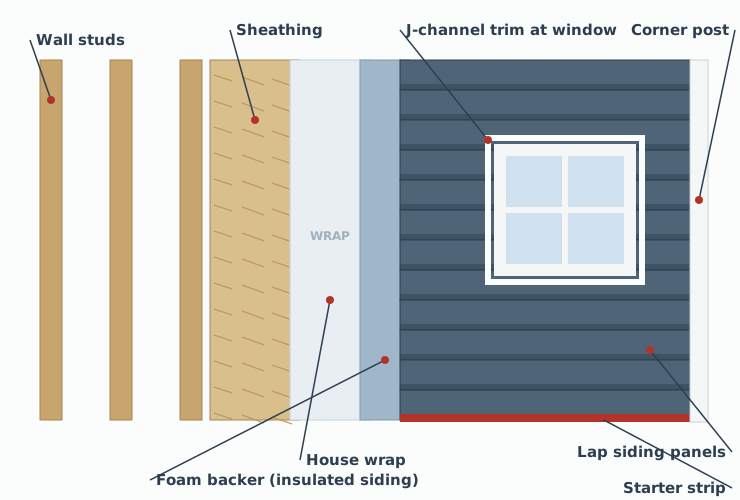
Cutaway of a house wall showing studs, sheathing, house wrap, foam backer, lap siding, J-channel and starter strip

Siding Repair

Cracked, loose, holed and blown-off panels, damaged trim and corner posts, and gaps around windows and doors. Here’s when a repair is enough and how a contractor matches older siding.

Siding repair

Vinyl Siding

Standard, thick and insulated vinyl: what changes with the price, and how each handles a Michigan winter.

Vinyl siding

Fiber Cement

James Hardie and other fiber cement: heavier, tougher, paint-ready, and the one many Birmingham and Bloomfield owners choose.

Fiber cement siding

Storm & Hail Damage Siding

Panels torn off by wind, hail holes and dents, tree damage, and how to document all of it for your insurance claim before anyone starts tearing off.

Storm damage siding repair

Not sure what you need?

Use the siding checker below, or call and describe what you see. A contractor can tell you whether it’s a repair or a replacement after one visit.

Check your siding

Siding checker

What Is Your Siding Telling You?

Siding usually shows trouble long before water reaches the inside walls. Match what you see to the likely cause.

Tap everything you’ve noticed and the checker points you to the guide that fits best. It’s a starting point, not an inspection. A walk around the house on a dry day, plus a look at any second-story walls with binoculars, tells you most of what you need.

Siding problems at a glance

Siding symptoms and what they mean
What you noticeWhat it usually meansWhere to start
White chalk on your hand when you rub the sidingAluminum siding whose factory finish has worn awaySiding replacement
A few cracked or holed panelsImpact damage on cold, brittle vinylSiding repair
Panels missing after a windstormPanels unlocked from the course below; nails may be looseStorm damage siding
Wavy, rippled panels on a sunny wallVinyl nailed too tight, or heat from a grill or reflected sunlightVinyl siding
Green film on the north sideAlgae and mildew in shade and moistureGentle cleaning first
Peeling paint or stains on interior wallsWater getting behind the siding at windows or trimSiding replacement

Materials

Vinyl, Fiber Cement, Aluminum: Which Siding Fits Your House?

A quick comparison of what goes on most Oakland County homes.

Most re-siding jobs in Oakland County come down to a handful of materials. Each one handles Michigan weather differently, and the right pick depends on your house, your budget and how long you plan to stay.

Siding materials compared
MaterialHow it handles Michigan weatherUpkeepGood fit for
Standard vinylFine in heat and cold, but thinner panels get brittle below freezing and can crack on impactWash once a yearBudget-friendly re-siding, rentals, garages
Thick / premium vinylStiffer panels stay straighter and resist dents and wind betterWash once a yearMost family homes in Troy, Southfield, Farmington Hills
Insulated vinylFoam backer adds stiffness and a modest boost to wall insulationWash once a yearDrafty 1950s–70s homes with little wall insulation
Fiber cement (e.g. James Hardie)Doesn’t melt, burn or get brittle in cold; heavy and very rigidRepaint every 10–15 yearsBirmingham, Bloomfield, newer custom homes
Engineered wood (e.g. LP SmartSide)Real-wood look, lighter than fiber cement; edges must stay sealedPaint and caulk upkeepCraftsman and cottage styles
AluminumDoesn’t crack, but dents easily and the finish chalks and fadesRepaint once it chalksMatching an existing aluminum house
CedarBeautiful, but needs paint or stain to resist moisture and woodpeckersMost maintenanceHistoric homes and accents

Popular siding colors around Oakland County

Grays, blues and soft whites dominate the newer subdivisions, while darker colors have come back on updated ranches and colonials. Darker vinyl absorbs more heat, so ask for a product rated for dark colors if you go that way.

Harbor grayMost requested on colonials
Colonial whiteClassic with black shutters
Lake slateBlue-gray, hides dirt well
Pine sageWorks with brick
Iron charcoalModern, needs a dark-rated panel
SandstoneWarm, pairs with stone

Colors shown are generic examples, not a specific manufacturer’s palette. Ask the contractor for real samples and look at them on your own wall in morning and afternoon light.

Michigan weather

What Michigan Winters and Summer Storms Do to Siding

The same few forces wear out siding on nearly every house in the county.

Freeze-thaw is the slow killer

Southeast Michigan sees freezing temperatures for a long stretch of every winter, and the temperature swings above and below freezing many times. Each swing works on the weak spots: water in a cracked panel or behind loose trim freezes, expands and opens the gap a little more. Ice dams at the roof edge send meltwater down behind the top courses of siding. By spring, a small problem from October can be wet sheathing.

Wind and summer storms

Lines of thunderstorms cross Oakland County every summer, and some bring damaging straight-line winds. Siding usually fails from the corners and edges first, where the wind gets under a panel and unlocks it from the course below. Once one piece goes, the next ones follow. Hail is less common than in the Plains, but when it comes it dents aluminum siding and gutters and can crack or puncture vinyl, especially on the side facing the storm.

Sun, shade and heat

South- and west-facing walls fade fastest. Meanwhile the north side of many houses, under big maples and oaks, stays damp and grows a green film of algae and mildew. And vinyl softens in heat: a grill parked too close, or sunlight reflected off a neighbor’s energy-efficient window, can warp or even melt a panel.

Not sure if that last storm did damage? Read the storm damage siding guide before you call your insurance company.

Weathered, faded siding on an older house with windows and a window air conditioner

The in-depth guide

How Siding Works, and Why It Fails

Knowing the layers behind your siding makes any estimate easier to understand.

What’s actually on your walls

Siding is only the outer layer of a wall system. From the inside out, a typical Oakland County house has wall studs, a layer of sheathing (plywood, OSB or, on older homes, fiberboard or wood boards), a water-resistive barrier such as house wrap or felt, and then the siding. Around every window and door, flashing and J-channel trim direct water out and away. At the bottom, a starter strip locks the first course in place; at the corners, corner posts hide the panel ends.

Vinyl and aluminum siding aren’t waterproof on their own. They shed most rain, but some water always gets behind them, and the house wrap and flashing are what keep it out of the wall. That’s why a re-siding job that skips new wrap and window flashing can look great and still leak.

How siding fails

Loose and unlocked panels. Vinyl hangs loosely on its nails so it can expand and contract. If it was nailed too tight, it buckles in summer; too loose or with too few nails, it blows off. See siding repair.

Cracks and holes. Cold vinyl cracks on impact. Woodpeckers, mice and carpenter bees go after wood siding and the soft spots behind it.

Water behind the siding. Missing kick-out flashing where a roof meets a wall, failed window flashing and clogged gutters send water behind the panels, where it rots sheathing and sills.

Worn finish. Aluminum chalks, vinyl fades and wood paint peels. At some point, refinishing isn’t worth it.

Repair or replace?

A handful of damaged panels on siding that’s otherwise in good shape is a repair, if a match can be found. Replacement makes sense when siding is past 25 to 30 years, the color is badly faded or chalking, damage is spread around the house, there’s rot or water damage behind it, or you’re fighting drafts and high heating bills. The siding replacement guide walks through the decision.

Cutaway diagram of a house wall: wall studs, sheathing, house wrap, foam backer, lap siding panels, J-channel trim at a window, corner post and starter strip

Before you hire

Michigan Siding Rules, and Mistakes to Avoid

A few minutes of homework protects you from the most common siding problems.

Michigan rules worth knowing

  • Licensing. Michigan licenses home improvement contractors through LARA as residential builders or maintenance & alteration contractors, and siding is one of the licensed trades. Ask for the license number and look it up on the state’s website.
  • Three-day right to cancel. Under Michigan’s Home Solicitation Sales Act, if you sign a contract at your home after a salesperson contacts you, you generally have three business days to cancel in writing.
  • Permits. Many Oakland County communities require a building permit for re-siding. A good contractor pulls it; ask before work starts.
  • HOA and historic rules. Subdivisions in Novi, Rochester Hills and West Bloomfield, and historic districts in places like Birmingham and Farmington, may control colors and materials.
  • Older homes and lead paint. If your house was built before 1978 and the job disturbs painted wood, federal lead-safe work rules apply. Ask the contractor how they handle it.

Avoid these mistakes

  • Don’t sign with a door-knocker the day after a storm. Get a local contractor to inspect first, and compare estimates.
  • Don’t let anyone side over rot. Covering soft sheathing or sills just hides the problem until it’s bigger.
  • Don’t pay in full up front. A deposit for materials is normal; the balance is due when the work is done.
  • Don’t pressure-wash vinyl hard. High pressure drives water behind panels. Use a soft brush or low-pressure wash.
Watch for storm chasers

After big storms, out-of-town crews knock on doors across Metro Detroit. Be careful with anyone who can’t show a Michigan license, a local address and proof of insurance, or who pushes you to sign today.

How it works

From First Call to New Siding in Four Steps

The first step is simple, so a qualified local contractor can see the house quickly.

  1. You call and describe it

    Tell us what’s wrong with the siding, where the house is and whether water is getting in. The call to (248) 487-6220 is free.

  2. You’re connected locally

    Your call goes to an independent siding contractor that serves your part of Oakland County, when one is available.

  3. The contractor visits

    They walk the house, check for soft spots and water behind the siding, show you samples and give you a written estimate.

  4. You approve, they install

    Nothing happens until you say yes. The contractor does the work and stands behind its own materials and labor.

Cost & estimates

What Drives the Price of New Siding

Every house is different, but the same factors raise or lower every siding estimate.

Siding is priced by the “square”, which is 100 square feet of wall, plus trim, labor and disposal. Because every house is different, be wary of any firm price given over the phone. A careful contractor measures the house, checks the sheathing in a few spots and writes up exactly what’s included: tear-off, wrap, flashing, trim, soffit and fascia, and cleanup.

Two estimates for the same house can look far apart for good reasons. One may include new house wrap, window flashing and aluminum trim wrap around every window; the other may side right over the old wrap. One may quote insulated vinyl, the other standard. Lay them side by side and compare line by line before you compare totals.

Ask about the whole exterior

Re-siding is the easiest time to replace soffit, fascia and gutters, and to fix window flashing. Doing it all at once avoids paying for a second setup later.

What moves the price of a siding job

Siding cost factors
FactorWhy it matters
House size and storiesMore squares and taller walls mean more material, labor and staging.
MaterialStandard vinyl, insulated vinyl, fiber cement and engineered wood price very differently.
Tear-offRemoving old aluminum or wood adds labor and disposal.
Sheathing repairsRotted or missing sheathing found during tear-off has to be fixed.
Windows and doorsEach opening needs flashing and trim; more openings mean more work.
Trim, soffit, fasciaWrapping trim and replacing soffit and fascia add to the scope.
AccessTight lot lines, decks and landscaping slow the job.

Know your house

Oakland County Homes and the Siding on Them

The age and style of your house say a lot about what’s behind the siding.

Two-story frame house with green and white lap sidingSuburban houses with brick fronts and siding on the upper floorsNewer home with white siding, black front door and front porch
Oakland County home types and siding issues
Home typeWhere you find itSiding issues to expect
1920s–1950s bungalows and Cape CodsRoyal Oak, Ferndale, Berkley, Hazel Park, Oak Park, Pleasant RidgeOld wood siding under aluminum, little wall insulation, rot at sills
1950s–1970s brick ranches and colonialsSouthfield, Troy, Madison Heights, Farmington Hills, WaterfordAluminum on upper floors and gables, chalking and dents
1980s–1990s subdivisionsTroy, Rochester Hills, West Bloomfield, NoviFirst-generation vinyl, faded and brittle, loose at corners
2000s and newer buildsNovi, Rochester Hills, South Lyon, Lake OrionBuilder-grade vinyl, waviness, HOA color rules
Custom and luxury homesBirmingham, Bloomfield Hills, FranklinFiber cement, cedar and stone accents, precise detailing
Lake cottages and year-round lake homesWaterford, White Lake, Keego Harbor, HighlandWind off the water, moisture, mixed old and new materials

Oakland County covers a lot of ground. There’s the walkable downtown in Birmingham and the Woodward Dream Cruise rumbling past every August; the Somerset Collection and the office towers along Big Beaver in Troy; Oakland University in Rochester Hills; Twelve Oaks in Novi; the Detroit Zoo at the edge of Royal Oak; Cranbrook in Bloomfield Hills; and hundreds of lakes from Waterford and White Lake up to Lake Orion. Under all of it are houses built in every decade of the last hundred years, and each era came with its own siding. A contractor who works here knows what’s likely under the aluminum on a 1958 ranch before the first panel comes off.

Service area

Siding Contractors Serving Every Corner of Oakland County

Each city has its own housing stock, and its own most common siding problems.

Troy

Colonials and ranches from the 1960s through the 1990s, many on their second round of siding. See siding contractors in Troy.

Rochester Hills

Larger subdivision homes, HOA color rules and lots of first-generation vinyl. Read about siding in Rochester Hills.

Southfield

Postwar brick ranches with aluminum gables and trim. Visit Southfield siding.

Royal Oak

Bungalows and Cape Cods with old wood siding under aluminum or vinyl. See Royal Oak siding contractors.

Novi

1990s and 2000s builds with builder-grade vinyl and HOA approvals. Read siding in Novi.

Birmingham & Bloomfield Hills

Older homes, new builds and luxury exteriors with fiber cement and cedar. See Birmingham siding.

Farmington Hills

Mid-century homes and condo communities with aging aluminum and vinyl. Visit Farmington Hills siding.

Waterford & West Bloomfield

Lake homes, cottages and ranches exposed to wind off the water. Read Waterford siding.

Everywhere else in the county

Ferndale, Berkley, Clawson, Madison Heights, Auburn Hills, Pontiac, Lake Orion, Clarkston, Oxford, Milford, Wixom and more can call too. Contact details.

Transparency

How Our Referral Service Works

Clear about who we are, and what to check before anyone takes off a single panel.

Oakland County Siding Pros is a referral service, not a siding contractor. When you call, we connect you with an independent siding contractor that serves your area. That company inspects the house, gives you an estimate, does the work and stands behind it. The call is free and you’re never obligated to hire anyone. We may be paid by participating companies for referrals.

Because the contractor is a separate business, check them the way you’d check anyone working on your home: a Michigan license, proof of liability and workers’ compensation insurance, references from nearby jobs, and a written contract that lists the materials and the scope. Our about page explains how the referral works.

Questions to ask any siding contractor

  • What is your Michigan license number?
  • Can I see proof of liability and workers’ comp insurance?
  • Will you replace the house wrap and window flashing, or reuse them?
  • What happens if you find rot behind the old siding?
  • Which product, thickness and color are you quoting?
  • Who pulls the permit, and what warranty covers the labor?

Before and after

Keep Your Siding in Shape, and What to Have Ready

A little attention between Michigan winters catches most problems while they’re small.

Simple habits that help siding last

  • Walk around the house each spring and fall, and after every big storm. Look for loose, cracked or missing pieces.
  • Wash it once a year with a soft brush and mild soap, or a low-pressure rinse. Never blast vinyl with high pressure.
  • Keep gutters clear so water doesn’t overflow down the walls and behind the top courses.
  • Trim shrubs and branches back from the walls so they don’t scrape the siding or trap moisture.
  • Keep grills and fire pits well away from vinyl walls.
  • Re-caulk around windows and trim where the old caulk has cracked.

What to have ready when you call

  • Your address or nearest cross streets
  • What you’ve noticed, and where
  • Current siding type, if you know
  • Roughly when the house was built
  • Whether a storm caused it
  • Photos of each side of the house

Planning a full replacement? Have a rough idea of the color and material you like. If you’re in an HOA, check its exterior rules first.

FAQ

Siding Questions from Oakland County Homeowners

How do I find a good siding contractor in Oakland County, MI?

Look for a Michigan license, proof of insurance, a local address, photos of recent jobs nearby and a written estimate that lists materials, wrap, flashing and trim. Calling us connects you with an independent local contractor; you can still ask all of these questions before you hire.

What are the best siding companies in Michigan?

The best siding company for you is one that’s licensed and insured, explains what’s behind your old siding, puts the scope in writing and stands behind the work. We don’t rank companies; we connect you with an independent local contractor, and you’re always free to compare.

How long does siding last in Michigan?

Quality vinyl often lasts 25 to 40 years, fiber cement 40 years or more with repainting, and aluminum can last decades but chalks and fades. Freeze-thaw, sun exposure and how well it was installed make a big difference.

Should I replace aluminum siding with vinyl?

For many 1950s–70s Oakland County homes, yes. New vinyl or insulated vinyl won’t chalk, doesn’t need paint, and replacing it is a chance to add new house wrap, flashing and insulation. Fiber cement is another option if you want a heavier, paintable siding.

Can new siding go over old siding?

Sometimes it can, but most contractors recommend tearing off so they can inspect the sheathing, fix rot, and install new wrap and flashing. Covering old siding can hide water damage.

Does homeowners insurance cover siding damage?

Many policies cover sudden wind and hail damage, minus your deductible. They usually don’t cover wear and age. Matching discontinued siding is handled differently by different insurers, so ask your agent.

Do I need a permit to replace siding in Oakland County?

Many communities in the county require a building permit for re-siding. Requirements vary by city and township, so ask your contractor to check with your local building department and pull the permit.

Is insulated vinyl siding worth it?

It can be on older homes with little insulation in the walls. The foam backer makes the panels stiffer and straighter and adds some insulation. How much you save on heating depends on the rest of the house.

What time of year is best to replace siding in Michigan?

Spring through fall is easiest, but vinyl can be installed in cold weather by an experienced crew that knows how to handle cold panels. Schedules fill up after storms and in late summer, so plan ahead.

Does it cost anything to call Oakland County Siding Pros?

No. The referral call is free and there’s no obligation. Any inspection, estimate and work are offered and priced by the independent siding contractor you’re connected with.

Talk to a local siding contractor

Siding problems? Talk to a local siding pro.

One free call connects you with an independent siding contractor that serves Oakland County, Michigan.

How the referral works
Free call, no obligation(248) 487-6220Call a Siding Pro
Call Now · (248) 487-6220