Tear-off, wrap, flashing & new siding
Siding Replacement in Oakland County, MI
Chalky aluminum, faded and brittle vinyl, or wood that won’t hold paint any more. Here’s how to tell it’s time for new siding, what a proper replacement includes, and how to compare estimates.
Free referral to an independent local siding contractor. You’re never obligated to hire.

What Siding Replacement Includes
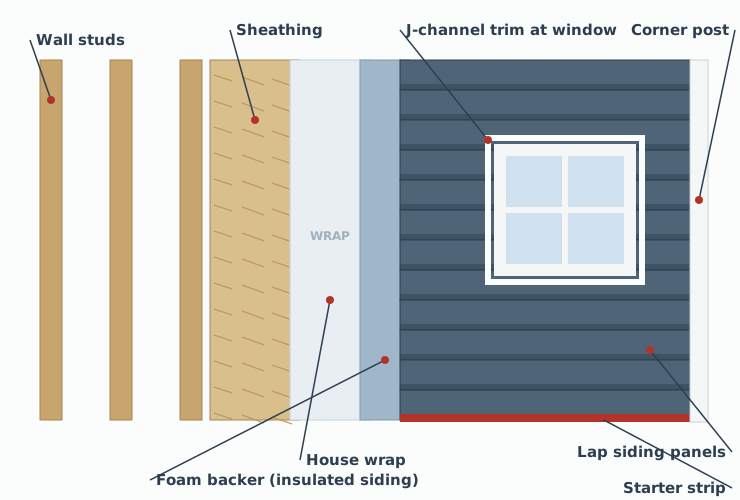
Siding replacement in Oakland County, MI usually means removing the old siding down to the sheathing, repairing any rotted or damaged sheathing, installing new house wrap and window and door flashing, then putting up new siding, trim, corner posts and, often, new soffit and fascia. Most single-family homes take a few days to two weeks, depending on size, material and what turns up behind the old siding.
The siding you see is only part of the job. On a house built in Royal Oak in 1948 or in Southfield in 1962, the original wood siding may still be there under a later layer of aluminum, with tar paper or nothing at all behind it. Tearing it off lets the contractor see the wall, fix what’s soft, and put in a modern water-resistive barrier before the new siding goes on. That’s the difference between a house that just looks new and one that stays dry. It’s also why a careful siding contractor in Oakland County will want to pull a few test panels before quoting a final price.
Signs It’s Time to Replace Your Siding
- Chalking and fading. Rub your hand on aluminum siding; if it comes away white, the finish is gone. Vinyl that has faded unevenly won’t come back.
- Cracks, holes and breaks on several walls, not just one or two panels.
- Warping, buckling or waviness across whole walls, often from poor original nailing.
- Soft or rotted spots when you press on the siding near windows, doors or the bottom courses.
- Peeling paint, stains or mold on interior walls that back onto an exterior wall.
- Loose panels after every windstorm, even after repairs.
- Drafty rooms and rising heating bills in an older home with little wall insulation.
- Age. Many first-generation vinyl jobs from the 1980s and 1990s are reaching the end of their useful life.
Tear-Off or Overlay?
Some contractors will install new siding right over the old, which saves on labor and disposal. It can be acceptable over flat, solid siding with no moisture problems. But in Oakland County, where so much siding is going over decades-old walls, most experienced contractors recommend a full tear-off.
| Tear-off | Overlay |
|---|---|
| Lets the crew inspect and repair sheathing and sills | Hides whatever is under the old siding |
| New house wrap and window flashing go in properly | Flashing details are harder to do right |
| Walls stay flat and trim fits cleanly | Uneven old siding telegraphs through |
| Costs more for labor and disposal | Saves money up front |
| Chance to add foam insulation board | Limited insulation options |
If a contractor finds soft sheathing or rotted sills and suggests covering them, get a second opinion. Moisture trapped under new siding keeps doing damage.
Choosing a New Siding
The material shapes the price, the look and the upkeep for the next few decades. Most homes here end up with one of these:
| Material | Strengths | Trade-offs |
|---|---|---|
| Premium vinyl | Low upkeep, wide color range, handles Michigan freeze-thaw | Thinner products crack in cold and wave in heat |
| Insulated vinyl | Stiffer, straighter walls, a little more insulation | Higher cost than plain vinyl |
| Fiber cement | Very durable, fire resistant, holds paint, crisp look | Heavy, costs more, needs repainting eventually |
| Engineered wood | Real-wood look with lighter weight | Edges and cuts must be sealed and painted |
| Aluminum or steel | Won’t crack in cold; steel resists dents | Aluminum dents and chalks; steel costs more |
For a closer look, read our guides to vinyl siding and fiber cement siding. If storm damage is what started the conversation, begin with the storm damage guide so the insurance side is handled first.
What Happens During a Siding Replacement
A typical job starts with protecting landscaping, windows and AC units. The crew strips one wall at a time, so the house is never fully open to the weather. As the sheathing is exposed, the lead checks for soft spots, replaces damaged sections and shows you anything unexpected before it’s covered. Then come the house wrap, taped at seams; flashing around windows and doors and at roof-to-wall joints; starter strip, corner posts and J-channel; and finally the siding, course by course, with trim, soffit and fascia last.
Expect noise, a dumpster in the driveway and some dust. Move patio furniture, grills and anything hanging on outside walls. At the end, a good crew sweeps the yard with a magnet for nails, walks the house with you and points out the details: sealed penetrations, neat cuts around outlets and faucets, and clean corners.
Ask the crew to photograph the sheathing and any repairs before they’re covered. It’s useful for your records, and for a future buyer.
Comparing Siding Estimates
Line up two or three written estimates and check that each one spells out:
- The exact product, thickness or series, and color
- Tear-off and disposal, or overlay
- House wrap brand and how seams and windows will be flashed
- Price per sheet for sheathing repairs found during tear-off
- Trim, soffit, fascia and gutter work, if included
- Permit, cleanup and the payment schedule
- The manufacturer’s warranty and the contractor’s workmanship warranty
- The contractor’s Michigan license number
If one estimate is far lower, it usually leaves something out, often the wrap, flashing or trim. Those are the parts that keep water out of the wall.
Adding Insulation During Re-Siding
Many Oakland County homes built before the 1970s have little or no insulation in the exterior walls. Re-siding is the easiest time to improve that, because the outside of the wall is already open. Options include insulated vinyl, which has foam bonded to the back of each panel, or a continuous layer of rigid foam board installed over the sheathing before the siding goes on. Either one also helps flatten wavy old walls so the new siding looks straighter.
Insulation from the outside won’t replace insulation inside the wall cavity, but it reduces heat loss through the studs and cuts drafts. Pair it with new house wrap and sealed window flashing, and many owners notice warmer rooms in January. Ask contractors to quote with and without foam so you can weigh the difference.
Understanding Siding Warranties
Most siding comes with two separate warranties. The manufacturer’s warranty covers defects in the product, such as cracking, peeling or excessive fading, and often requires installation to the manufacturer’s instructions. The contractor’s workmanship warranty covers installation problems like loose panels, leaks at flashing and buckling from tight nailing. Ask how long each lasts, whether it transfers to a future buyer, and what voids it. Keep the paperwork, product labels and your contract together.
FAQ
Siding Replacement Questions
How long does siding replacement take?
Many single-family homes take a few days to about two weeks. Size, number of stories, material, weather and sheathing repairs all affect the timeline. Fiber cement usually takes longer than vinyl.
Can I stay home while my siding is replaced?
Yes, most people do. It’s noisy, and you may need to keep pets and kids away from the work area, but the house stays closed and usable.
Will new siding lower my heating bills?
It can help, especially with insulated vinyl or added foam board on an older, poorly insulated house, and with new house wrap that cuts air leaks. Savings depend on the rest of the home, including attic insulation and windows.
Does new siding increase home value?
Siding replacement is one of the exterior projects that tends to recoup a good share of its cost at resale, and it dramatically improves curb appeal. Exact returns vary by market and house.
Should I replace windows and siding at the same time?
If your windows are near the end of their life, doing both together lets the contractor flash the new windows properly into the new wall. If not, the siding crew can still flash around the existing windows.
What happens if the contractor finds rot?
A good contract spells out the price per sheet of sheathing or per foot of trim for repairs found during tear-off. The contractor should show you the damage before fixing it.
What time of year is best for siding replacement?
Late spring through fall is ideal, but experienced crews install siding in colder months too. Schedules fill quickly after storms, so plan ahead.
Talk to a local siding contractor
Ready for new siding? Talk to a local siding pro.
One free call connects you with an independent siding contractor that replaces siding across Oakland County.
How the referral works