Standard, premium & insulated vinyl
Vinyl Siding in Oakland County, MI
Vinyl is on more Oakland County homes than any other siding. But there’s a big difference between the thin vinyl on a 1990s spec house and a thick, insulated panel installed right. Here’s how to choose.
Free referral to an independent local siding contractor. You’re never obligated to hire.

What to Know About Vinyl Siding
Vinyl siding in Oakland County, MI is the most common choice for re-siding because it doesn’t need paint, comes in many colors and profiles, and costs less than fiber cement or wood. The main choices are standard vinyl, thicker premium vinyl, and insulated vinyl with a rigid foam backer. How long it lasts depends heavily on the panel thickness and on how carefully it’s installed.
Vinyl went onto huge numbers of Metro Detroit homes in the 1980s and 1990s, often right over aluminum. Some of those early jobs used thin panels that have since faded, cracked and loosened. Modern vinyl is a different product: thicker, with better UV protection, longer panels and more realistic textures. If you’re weighing vinyl against other materials, our siding replacement page compares the options.
Standard, Premium and Insulated Vinyl
| Type | What it is | Best for |
|---|---|---|
| Standard / builder grade | Thinner panels, basic textures | Garages, sheds, rentals, tight budgets |
| Premium / thick | Thicker panels, deeper profiles, better rigidity | Most owner-occupied homes |
| Insulated vinyl | Premium panel with contoured foam bonded behind it | Older homes with uneven walls or little insulation |
| Vinyl shakes and board & batten | Accent profiles for gables and entries | Adding character to colonials and ranches |
Thickness matters most in Michigan. Thicker panels stay straighter on long walls, resist denting and cracking in cold weather, and hold up better against wind. Ask the contractor for the product line and its rated thickness, and compare like with like when you get estimates.
How Vinyl Handles Michigan Winters
Vinyl expands in summer heat and contracts in cold. A 12-foot panel can change length noticeably between a 90-degree August afternoon and a below-zero January night. That’s why it’s hung loosely: nails go in the center of the slots and are left slightly proud so the panel can slide. Nail it tight and it buckles in summer; nail it too loose or too far apart and the wind pulls it off.
Cold also makes vinyl brittle. A snowball won’t hurt it, but a shovel, a hockey puck or ice falling from the roof can crack a thin panel in February. Thicker and insulated panels hold up better, and keeping snow from piling against the bottom courses helps too.
Vinyl can go up in fall and early winter, but cold panels need careful handling and the crew has to leave the right gaps for summer expansion. Ask how they handle cold-weather installs.
Heat, Melting and Dark Colors
Vinyl softens at temperatures a grill can easily reach, so keep grills and fire pits well away from the wall. A less obvious culprit is reflected sunlight from a neighbor’s low-E windows, which can concentrate heat on one spot of your wall and warp it. Dark colors absorb more heat too; if you love charcoal or navy, ask for a product specifically rated for dark colors.
Installation Details That Make Vinyl Last
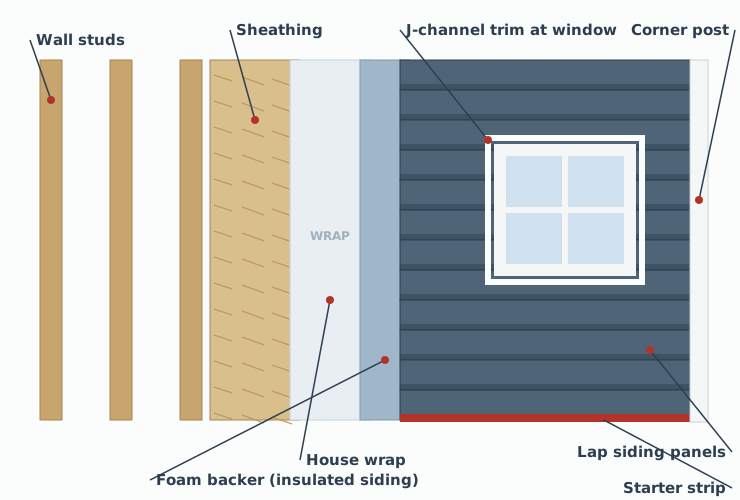
- New house wrap with taped seams under the siding.
- Proper window and door flashing, with J-channel lapped so water drains out, not in.
- Correct nailing: centered in the slots, not driven tight, spaced per the manufacturer.
- Expansion gaps at corner posts and J-channel.
- Kick-out flashing where roofs meet walls.
- Utility blocks for lights, outlets and hose bibs, not cut holes.
- Vented soffit to keep the attic dry, often done at the same time.
These details are where cheap jobs cut corners. They’re also what manufacturers check when you make a warranty claim. If you’re not sure your current siding was installed right, our siding repair guide explains what to look for.
Caring for Vinyl Siding
Vinyl is low maintenance, not no maintenance. Wash it once a year with a soft brush, mild soap and a garden hose, or a pressure washer on a low setting aimed downward, never up under the laps. Clean green algae off the north side before it stains. Check after storms for loose pieces. And keep sprinklers from soaking the same wall every morning.
Vinyl Siding Styles and Colors
Modern vinyl goes far beyond plain horizontal lap. Dutch lap adds a decorative groove to each course. Beaded profiles suit older homes. Board-and-batten vertical siding is popular on gables, entries and modern farmhouse updates. Shake and scallop profiles give Cape Cods and cottages a traditional accent. Many Oakland County homeowners mix two profiles, such as lap on the main walls and shakes or board-and-batten in the gables.
Color choices have widened too. Grays, blues and whites are the most requested in Troy and Rochester Hills subdivisions, while deeper greens, charcoals and navy show up on updated ranches in Royal Oak and Ferndale. Before you commit, look at real samples on your own wall at different times of day, and check any HOA list first. Our guide to siding contractors in Oakland County shows a few common color families.
Vinyl or Something Else?
Vinyl isn’t the only option. If woodpeckers, hail or heat keep damaging your walls, fiber cement may be worth the extra cost. If you only have a few damaged pieces, see siding repair first. And if a storm caused the damage, read the storm damage guide before choosing a replacement, since your insurance claim may affect what goes back on the house.
What Affects the Cost of Vinyl Siding
Vinyl is the most economical siding for most houses, but price still varies widely. The grade of panel is the biggest factor: standard, premium and insulated vinyl differ significantly in material cost. Wall area, number of stories and the shape of the house drive labor. Tear-off of aluminum or old vinyl adds labor and disposal. Trim details, such as aluminum wrapping around windows, new soffit and fascia, and accent profiles like shakes or board-and-batten, add more. Finally, sheathing repairs found during tear-off can change the total.
When comparing quotes, make sure each one names the exact product line and thickness, and lists house wrap, flashing and trim. A low price often means a thinner panel or skipped details. Our siding cost guide goes through each factor.
FAQ
Vinyl Siding Questions
How long does vinyl siding last in Michigan?
Quality vinyl installed well often lasts 25 to 40 years. Thin builder-grade vinyl, south-facing walls and poor installation shorten that.
Is insulated vinyl siding worth the extra cost?
It often is on older homes with little wall insulation or wavy walls. It’s stiffer, straighter and quieter, and adds some insulating value. On a newer, well-insulated home, premium non-insulated vinyl may be enough.
Can vinyl siding be painted?
It can, with paints made for vinyl in colors no darker than the original, or the panels may warp. Many homeowners find replacement a better long-term fix for badly faded vinyl.
Does vinyl siding crack in the cold?
Vinyl becomes more brittle in cold weather and can crack on impact. Thicker and insulated panels resist cracking better.
What color vinyl siding fades the least?
Lighter colors generally show fading less. Modern products with better UV protection hold darker colors longer, but ask about the manufacturer’s fade warranty.
Can vinyl go over aluminum siding?
It can in some cases, but many contractors prefer to remove the aluminum so they can inspect the wall and install new wrap and flashing.
Does vinyl siding need house wrap?
Yes. Vinyl sheds most rain, but some water always gets behind it. House wrap and flashing are what keep that water out of the wall.
Is thicker vinyl siding worth it?
In Michigan it usually is. Thicker panels resist cracking in cold weather, stay straighter on long walls and hold up better in wind.
What is the most popular vinyl siding style in Oakland County?
Traditional horizontal lap is the most common, often with shake or board-and-batten accents on gables. Grays, blues and whites are the most requested colors in newer subdivisions, with darker shades growing in popularity on updated ranches and older bungalows.
How should I clean vinyl siding?
Use a soft brush and mild soap with a garden hose, working from the bottom up and rinsing from the top down. Avoid high pressure aimed up under the panels, which can drive water behind the siding.
Talk to a local siding contractor
Thinking about vinyl siding? Talk to a local pro.
One free call connects you with an independent siding contractor that installs vinyl across Oakland County.
How the referral works