Wind, hail & fallen trees
Storm Damage Siding Repair in Oakland County, MI
A summer storm tears siding off the corner of the house, hail pocks the vinyl on the west wall, or a maple limb comes down against the garage. Here’s what to do first, how to document it, and how the repair and claim usually go.
Free referral to an independent local siding contractor. You’re never obligated to hire.

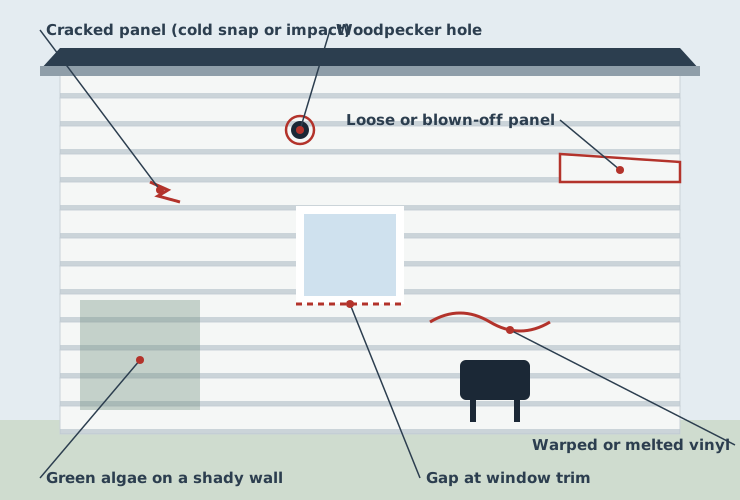
What Storm Damage Siding Repair Covers
Storm damage siding repair in Oakland County, MI means replacing panels torn off by wind, cracked or holed by hail, or crushed by falling limbs; re-securing loose courses; repairing damaged trim, gutters and soffits; and covering exposed walls so rain can’t get in until the permanent repair is done. Many jobs go through a homeowners insurance claim.
Southeast Michigan’s summer storms can be violent. Squall lines with straight-line winds roll across Oakland County most years, knocking down trees and power lines from Novi to Lake Orion. Siding usually fails at corners and on the side facing the wind, where a gust gets under a panel and unlocks it. Hail is less frequent, but a single storm can dent aluminum and puncture vinyl across a neighborhood. For general background, see our Oakland County siding contractor guide.
What to Do Right After the Storm
- Stay safe. Keep away from downed lines and call DTE Energy and, if there’s danger, 911.
- Photograph everything: each side of the house, close-ups of damage, pieces of siding in the yard, dented gutters, and hail with a coin for scale.
- Cover exposed walls. If house wrap or sheathing is showing, a tarp or temporary cover keeps rain out. Keep receipts.
- Check inside for water stains on exterior walls and around windows.
- Call your insurance company to report the damage and ask what they need.
- Have a local contractor inspect and document the damage before you sign anything.
Storm Damage to Look For
| What you see | What it means |
|---|---|
| Missing panels, often at corners | Wind unlocked the courses; nearby panels may be loose too |
| Round dents in aluminum siding and gutters | Hail; check the windward side of the house |
| Holes or cracks in vinyl | Hail or flying debris |
| Chips or cracks in fiber cement | Large hail or impact |
| Crushed siding and bent trim | Falling limbs |
| Stains inside after the storm | Water got behind damaged siding or flashing |
Look at more than the siding. Dented gutters, downspouts, window screens and AC fins often show hail size and direction, which supports a claim. Roofs are often hit by the same storm, so have the roof checked as well.
Insurance Claims for Siding
Many homeowners policies cover sudden damage from wind, hail and falling trees, minus your deductible. Wear and age usually aren’t covered. Here’s how a typical siding claim goes:
- Report the claim promptly and write down the claim number.
- Ask your contractor to be present when the adjuster inspects.
- Get the adjuster’s estimate in writing and compare it with the contractor’s.
- If hidden damage turns up during the work, the contractor can document it and request a supplement.
- Keep every photo, receipt and email.
Matching is the sticking point on many siding claims. If the damaged siding is discontinued or faded, a few new panels won’t match the rest of the house. How insurers handle that depends on your policy and the adjuster, so ask early. Our siding repair guide explains how contractors look for matches.
After big storms, crews from out of state knock on doors across Metro Detroit. Ask for a Michigan license number, a local address and proof of insurance, and remember Michigan’s three-day cancellation right for many contracts signed at home.
Repair or Replace After a Storm
If damage is limited to one or two walls and a match is available, a repair makes sense. If wind or hail hit the whole house, the siding is old, or a match can’t be found, re-siding may be the better path, sometimes with insurance covering part or all of it. A storm is also a chance to upgrade: thicker vinyl, insulated vinyl or fiber cement all resist impact better than older thin vinyl or aluminum. See siding replacement for the full picture.
Trees and Siding
Oakland County’s big oaks and maples are beautiful until a storm brings a limb down. Have an arborist look at large trees close to the house, trim branches that overhang the roof or rub the walls, and watch for dead limbs before storm season. Damage from a tree falling on the house in a storm is usually covered by insurance; removal of the tree itself may be covered up to a limit.
Temporary Protection Until Repairs
When panels are missing and house wrap or sheathing is exposed, rain can get into the wall quickly. A contractor can fasten a heavy tarp or temporary sheathing over the damaged area, or reinstall loose panels as a stopgap. Most homeowners policies expect you to take reasonable steps to prevent further damage, and the cost of emergency protection is often part of the claim. Keep receipts and take photos before and after.
If you put up a temporary cover yourself, only do what you can reach safely from the ground. Don’t climb ladders in wind or near damaged power lines. Note the date and time you discovered the damage and what you did, since your insurer may ask.
How Hail Damages Siding
Hail hits the side of a house at an angle, so damage is usually concentrated on the walls facing the storm. On aluminum siding, hail leaves round dents that are easy to see in low sunlight. On vinyl, small hail may leave little visible damage, while larger stones can crack or punch through thin panels, especially in cooler weather when vinyl is less flexible. Fiber cement resists most hail but can chip with very large stones. Look at window screens, gutters, downspouts and AC fins on the same side of the house; damage there helps show the storm’s size and direction.
Because roofs are often hit by the same storm, have the roof inspected too. If the damage is extensive, a full siding replacement may be part of the claim.
After the Repair
When storm repairs are done, walk the house with the contractor. Check that new panels lock tightly into the courses above and below, that corners and trim are secure, and that any water damage behind the siding was repaired rather than covered. Ask for final photos and invoices for your insurance file, and keep any leftover matching panels; they’ll make the next repair easier. Then make a note to check the same walls after the next big storm, since panels near earlier damage are often the first to loosen again.
FAQ
Storm Damage Siding Questions
Does homeowners insurance cover storm damage to siding?
Many policies cover sudden wind and hail damage, minus the deductible. Wear, age and long-term leaks usually aren’t covered. Read your policy or ask your agent.
How soon should I file a siding claim?
As soon as you can. Policies set deadlines for reporting, and fresh photos make the damage easier to tie to a specific storm.
What if my siding can’t be matched?
Ask your adjuster how your policy handles matching. Some situations lead to replacing more siding than was physically damaged; others don’t. A contractor can document the search for a match.
Can I cover exposed walls myself?
If it’s safe and at ground level, a tarp fastened over the opening can keep rain out. Don’t climb ladders in wind or near power lines; call a contractor instead.
Does hail damage vinyl siding?
Large hail can crack or punch holes in vinyl, especially thinner panels and the walls facing the storm. Smaller hail may only dent aluminum or gutters.
Should I upgrade my siding after storm damage?
If you’re replacing anyway, thicker vinyl, insulated vinyl or fiber cement can stand up better to the next storm. Your insurer usually pays for like-kind replacement; upgrades are your choice and cost.
Will my roof be damaged too?
Storms that damage siding often damage roofs, gutters and windows. Have the whole exterior inspected and include all damage in one claim.
What if the storm damage is only cosmetic?
Some policies treat purely cosmetic dents differently from damage that lets water in. Read your policy and ask your adjuster.
Should I wait for the adjuster before repairs?
Make temporary repairs to prevent further damage right away, and document everything. Ask your insurer before making permanent repairs so the damage can be inspected first.
Talk to a local siding contractor
Storm damage on your siding? Talk to a local pro.
One free call connects you with an independent siding contractor that handles storm damage across Oakland County.
How the referral works